Credits
Every photograph on this site
Licences were checked on each Wikimedia Commons file page on 17 November 2026. CC BY-SA images, if any appear, are used on the website only, and are not placed in the downloadable fact sheets.
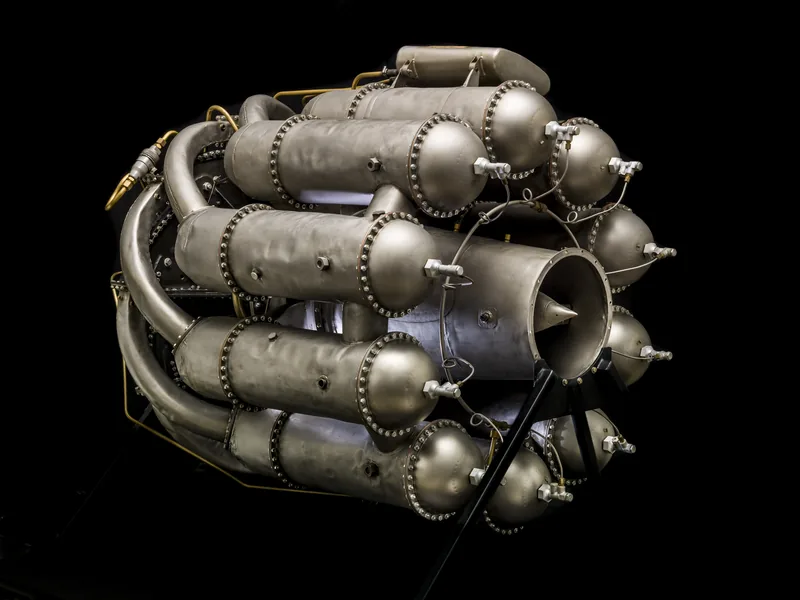
A Whittle W.1X turbojet, National Air and Space Museum object A19500082000, photographed by Dane A. Penland on 11 February 2016. It is a modern photograph of the W.1X. The museum’s longer label says the W.1, not the W.1X, flew officially in the E.28/39 on 15 May 1941, and that the W.1X, a non-airworthy engine, unofficially became the first British turbojet to be airborne during taxiing tests when the E.28/39 made short, straight hops. The file is CC0 1.0. Photo: Dane A. Penland, 11 February 2016, National Air and Space Museum · CC0 1.0 · Wikimedia Commons 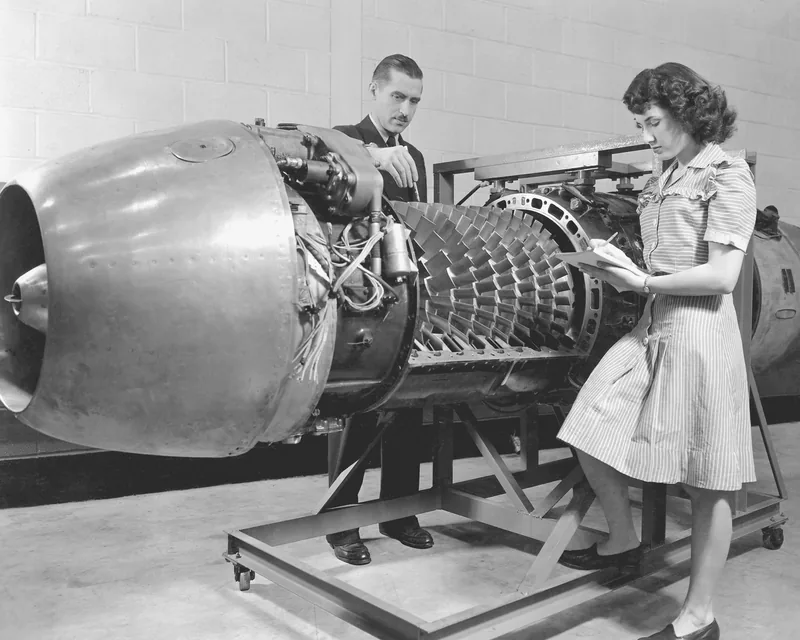
A Jumo 004 jet engine with its cover removed, being investigated at the Aircraft Engine Research Laboratory of the National Advisory Committee for Aeronautics, Cleveland, Ohio, on 24 March 1946. NASA photograph, U.S. government work in the public domain. Photo: NASA (National Advisory Committee for Aeronautics), 24 March 1946 · Public domain (U.S. government work) · Wikimedia Commons 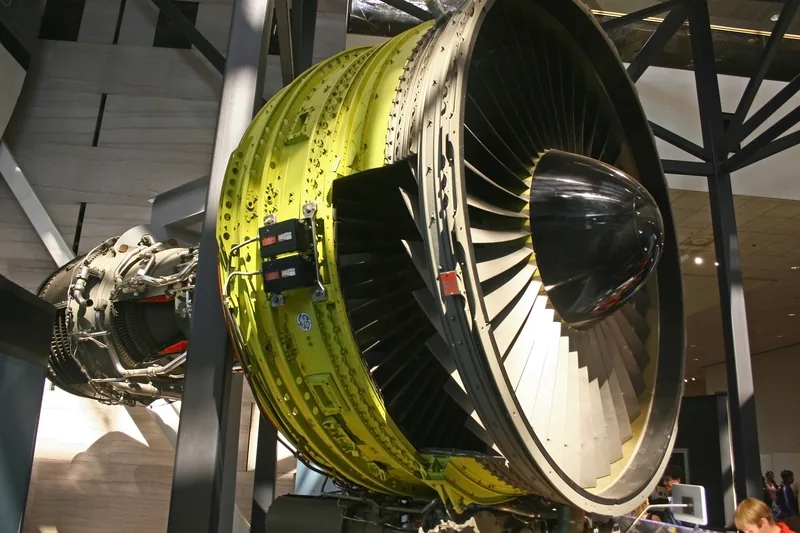
A General Electric CF6 high-bypass turbofan, photographed by Sanjay Acharya on 28 May 2008. The name identifies the engine in the photograph. This site does not repeat unsourced file-page history. The file is CC BY-SA 3.0 and is used on the website only, not in the typographic fact sheets. Photo: Sanjay Acharya, 28 May 2008 · CC BY-SA 3.0 (website only) · Wikimedia Commons 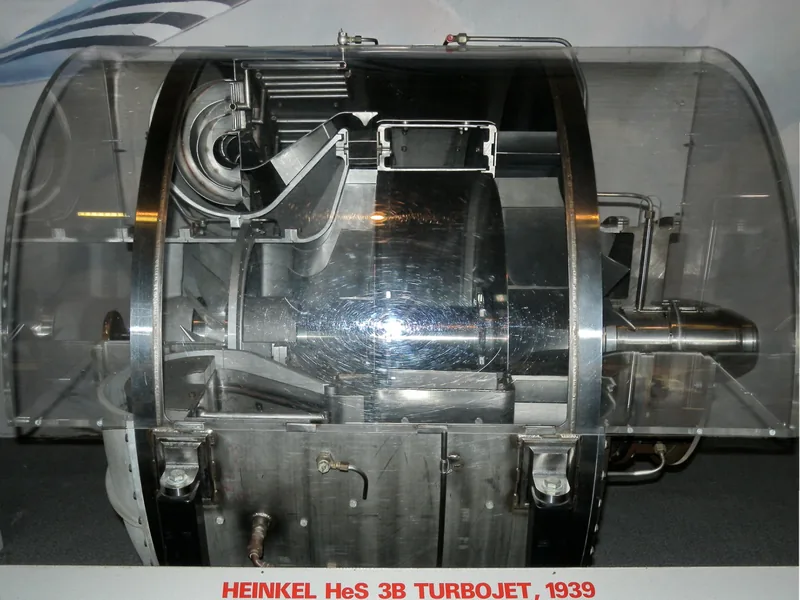
A replica of a Heinkel HeS 3 turbojet, photographed by Cliff on 7 March 2009. The National Air and Space Museum’s object of this type is a non-working reproduction, built from plans drawn by Dr von Ohain, and is not the 1939 flight engine. This photograph is of a replica, not that flight engine. The file is CC BY 2.0. Photo: Cliff, 7 March 2009 · CC BY 2.0 · Wikimedia Commons 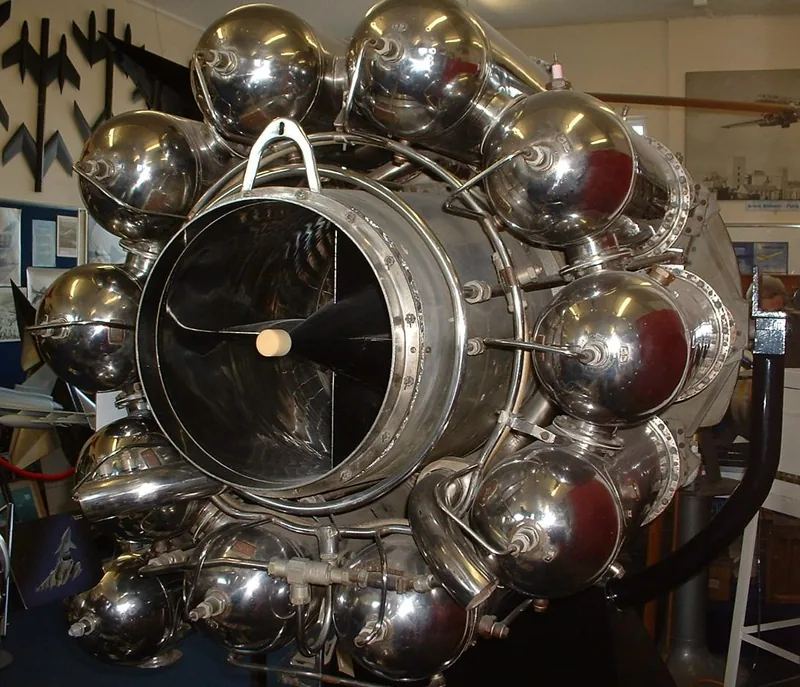
A Whittle W2/700 jet engine, photographed by Gaius Cornelius at Farnborough on 22 January 2006. It is identified here only as a W2/700 on that date. This site does not repeat unsourced “first turbojet” claims from the file page, and does not treat this engine as the W.1 that flew officially on 15 May 1941. The original is 1092 pixels wide, so there is no 1600-pixel image. The file is in the public domain. Photo: Gaius Cornelius, 22 January 2006, at Farnborough · Public domain · Wikimedia Commons 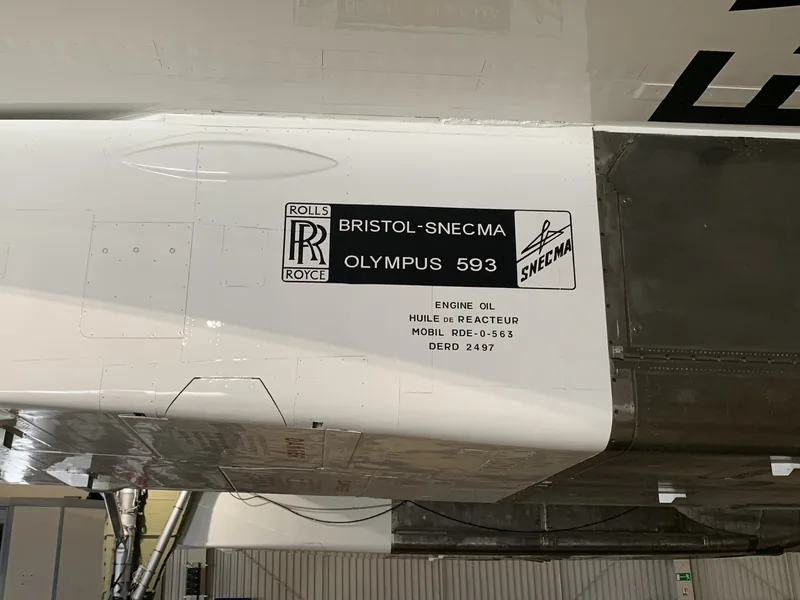
A Rolls-Royce/Snecma Olympus 593 engine, photographed by GerdeeX on 16 August 2022. The file identifies it as the make and model of the engine that equipped Concorde. This site does not add a further official performance story beyond that identification. The file is CC0 1.0. Photo: GerdeeX, 16 August 2022 · CC0 1.0 · Wikimedia Commons 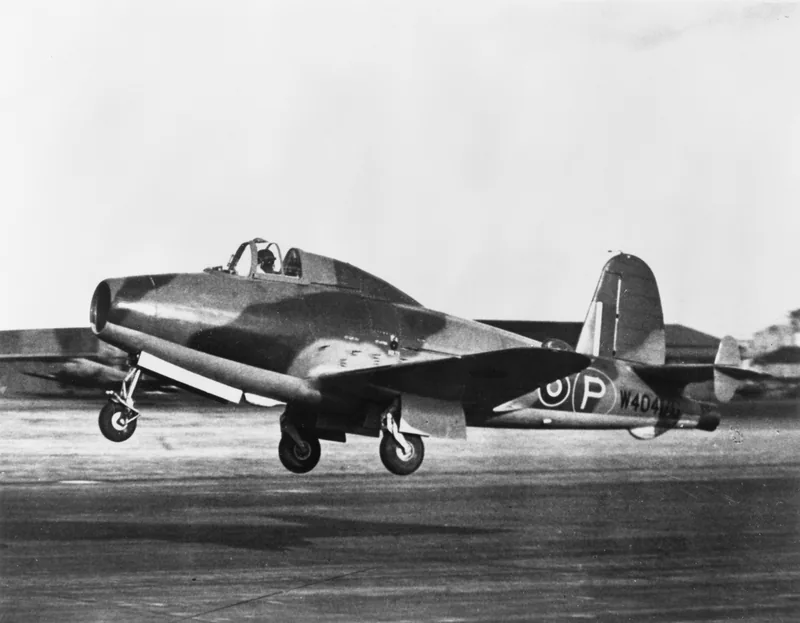
The Gloster E.28/39, serial W4041, at Farnborough, with Squadron Leader J. Moloney, circa 1941, photographed by Devon SA, a Royal Air Force official photographer. Imperial War Museums photograph CH14832A. The National Air and Space Museum says the W.1 flew officially in the E.28/39 on 15 May 1941. This picture is identified as W4041, circa 1941; it is not captioned here as a photograph of that first official flight. The file is in the public domain. Photo: Devon SA, Royal Air Force official photographer, Imperial War Museums CH14832A · Public domain · Wikimedia Commons 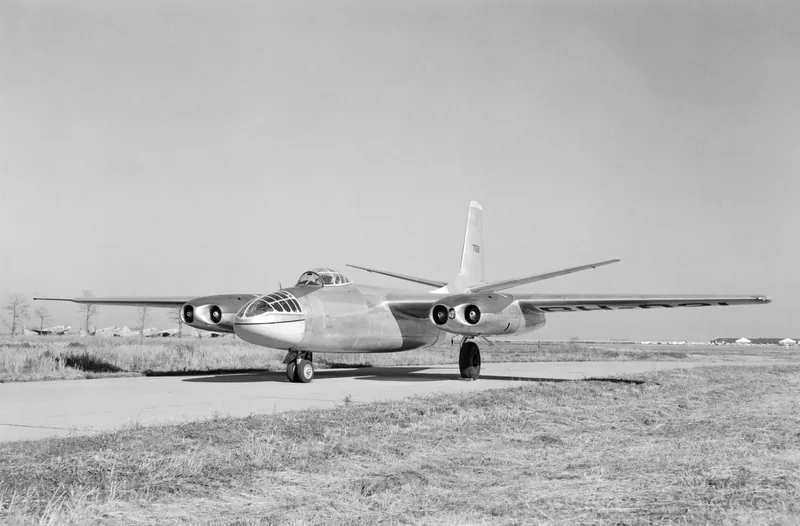
A North American B-45A Tornado, serial 47-021, at the NACA Langley Aeronautical Laboratory, Hampton, Virginia, on 6 November 1949. NASA photograph EL-2000-00269. The file says the B-45 was powered by four General Electric J35 turbojets. U.S. government work in the public domain. Photo: NASA, 6 November 1949, Photo ID EL-2000-00269 · Public domain (U.S. government work) · Wikimedia Commons 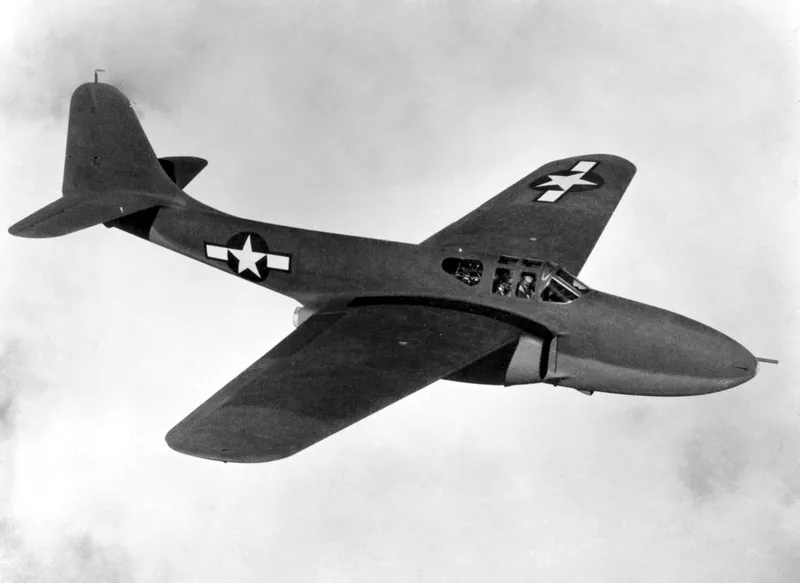
A Bell YP-59A in flight, a United States Air Force photograph. The file identifies the aircraft only as a YP-59A, a service-test Airacomet, not as the XP-59A that the National Air and Space Museum dates to 2 October 1942. U.S. government work in the public domain. Photo: United States Air Force · Public domain (U.S. government work) · Wikimedia Commons 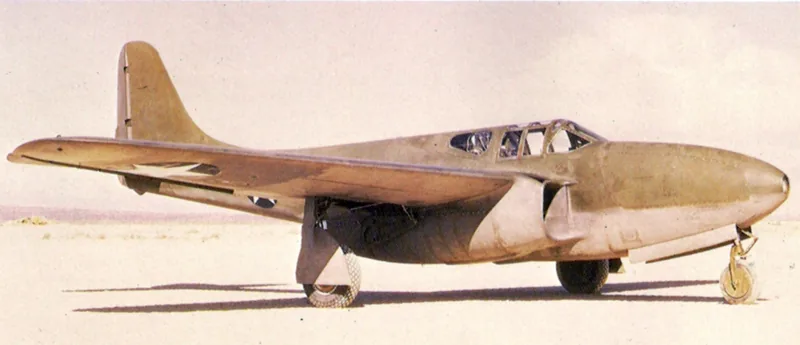
A U.S. Army Air Forces Bell XP-59A Airacomet, serial 42-108784, at Muroc Dry Lake, California, circa October 1942. The National Air and Space Museum says the Bell XP-59A Airacomet, powered by General Electric’s IA, was the first U.S. jet aircraft, on 2 October 1942. This caption identifies the airframe and place; it does not claim the photograph was taken during that first flight. The original is 1247 pixels wide, so there is no 1600-pixel image. U.S. government work in the public domain. Photo: U.S. Army Air Forces, circa October 1942 · Public domain (U.S. government work) · Wikimedia Commons 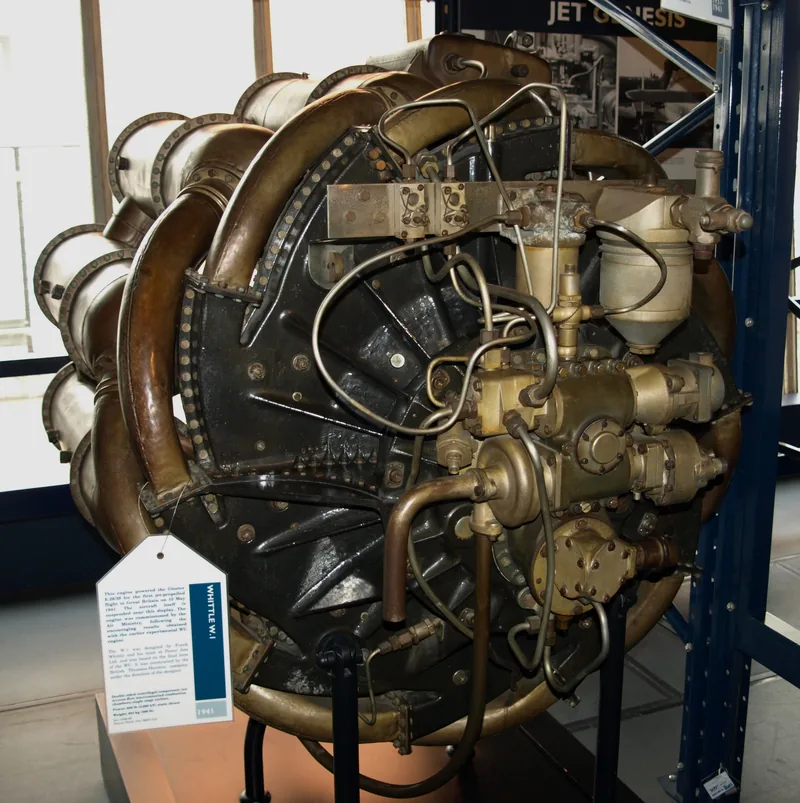
A Power Jets W.1 turbojet at the Science Museum, London, photographed by Nimbus227 on 22 September 2009. The file identifies it as a W.1. The National Air and Space Museum says the W.1 flew officially in the E.28/39 on 15 May 1941. This site does not treat the photograph as the particular engine from that flight, and does not repeat a further “first” claim from the file page. The file is in the public domain. Photo: Nimbus227, 22 September 2009, at the Science Museum, London · Public domain · Wikimedia Commons 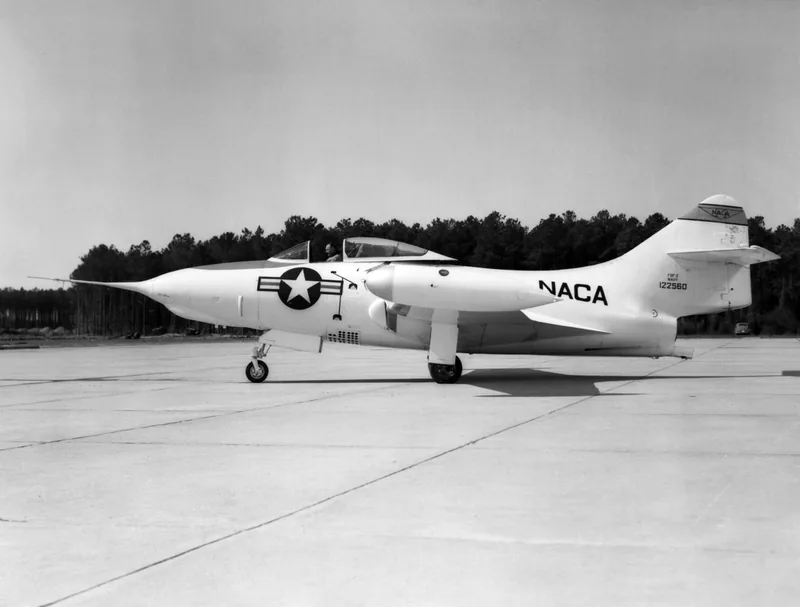
A Grumman F9F-2 Panther, Bureau Number 122560, at the Langley Aeronautical Laboratory, Hampton, Virginia, on 16 April 1958. NASA photograph EL-2002-00295. The file says the aircraft was originally built as an F9F-3 and, with a Pratt & Whitney J42 turbojet, received the F9F-2 designation, and that it underwent handling-quality tests at Langley. U.S. government work in the public domain. Photo: NASA, 16 April 1958, Photo ID EL-2002-00295 · Public domain (U.S. government work) · Wikimedia Commons
Enjoyed this jet-engine desk?
No pop-ups. No intrusive advertising. Just interesting stuff. A little support helps the next mechanics.im site get built.