For families
A sky-drinking engine, and a little aeroplane on the grass
A jet engine looks complicated. The official story is surprisingly simple, if you let the official pages say it in their own words.
A jet drinks air. NASA says a rocket has to carry its oxygen with it, but a turbine engine takes oxygen from the sky, which is why it will not work in outer space. In a typical jet, the same official family of pages says, you mix a lot of air with only a little fuel — 100 pounds of air a second, and 2 pounds of fuel. Most of what blasts out of the back began as ordinary air. [source] [source]
Inside, a compressor squeezes the air, rather like a fan you have to drive. A little fuel burns. A turbine, “like a windmill,” takes some of the energy to turn the compressor, and there is still enough left to speed the gas out of a nozzle. If that gas leaves faster than the air coming in, the aeroplane gets a push. [source]
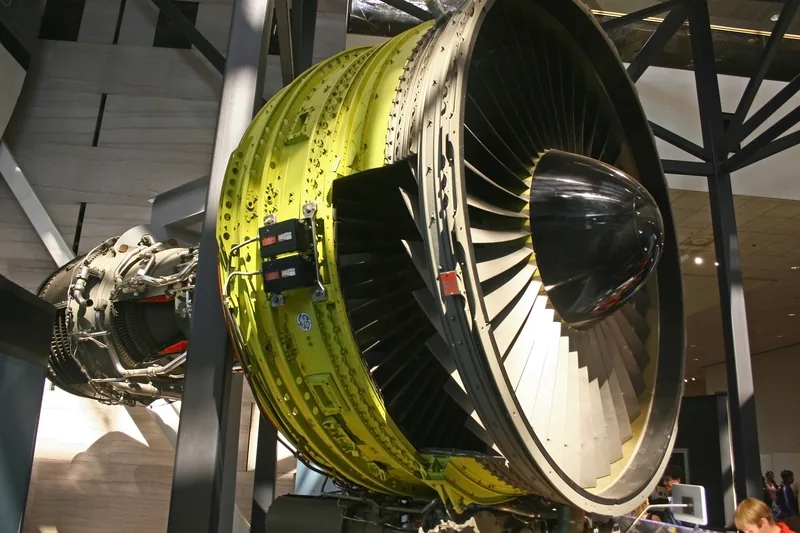
On a modern airliner, a big fan at the front sends some air through the hot core and lets the rest walk around the outside, “just like the air through a propeller.” That is a turbofan, and NASA says it gives more thrust for nearly the same fuel in the core. [source]
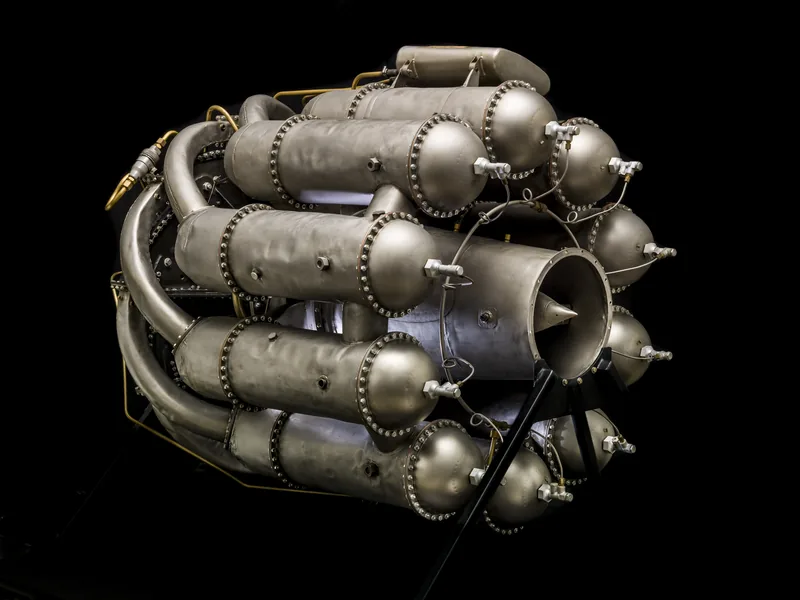
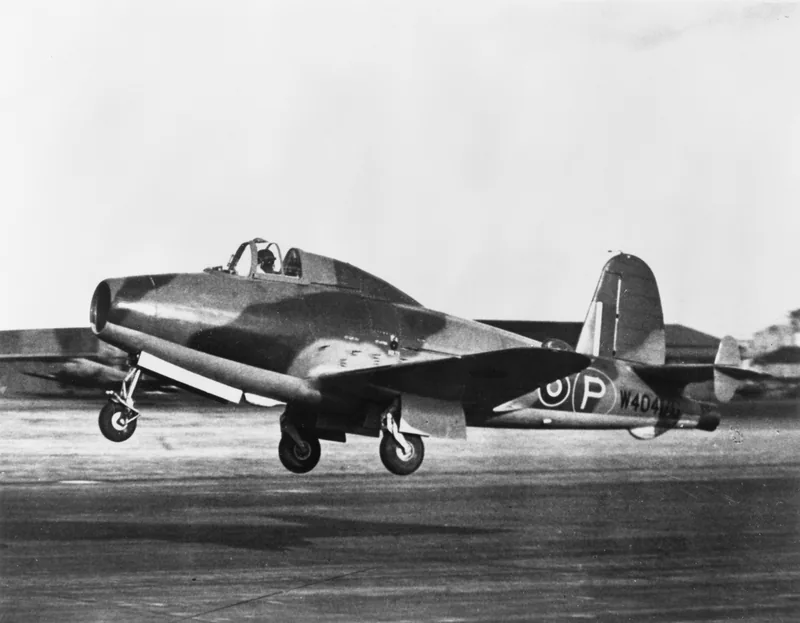
The little aeroplane on the grass is a Gloster E.28/39, an official British jet of about 1941. The museum says its official engine, the W.1, flew on 15 May 1941, after some unofficial short hops. In Germany, on 27 August 1939, another official label says, a Heinkel He 178 had already made the world’s first flight of a turbojet aircraft. Two first flights, carefully dated, and no need to turn them into a squabble at the kitchen table. [source] [source]
Things to look for together
- On the home-page desk, open “Inlet, or intake?” and enjoy NASA’s little aside about the English word.
- On the facts page, find the two official 1937 dates, and talk about why this site will not decide who ran first.
- Print a free fact sheet and take it on a museum visit, or pin it up at home.
Enjoyed this jet-engine desk?
No pop-ups. No intrusive advertising. Just interesting stuff. A little support helps the next mechanics.im site get built.