Two kinds of gas turbine
Air that walks around the core
“A turbofan engine is the most modern variation of the basic gas turbine engine,” NASA writes. “Most modern airliners use turbofan engines because of their high thrust and good fuel efficiency.” The trick is not a bigger fire. It is a fan, and a stream of air that never enters the burner at all.
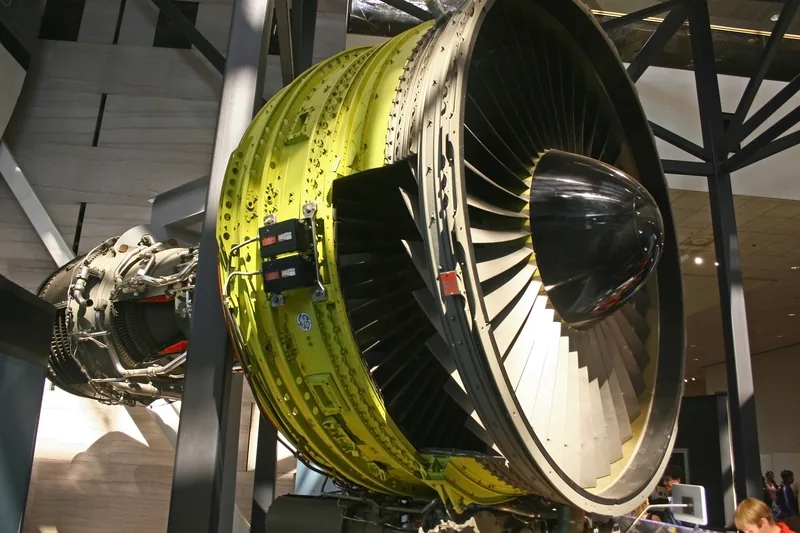
“The core engine is surrounded by a fan in the front and an additional turbine at the rear.” “This type of arrangement is called a two spool engine; one ‘spool’ for the fan, one ‘spool’ for the core.” Some incoming air “passes through the fan and continues on into the core compressor and then into the burner.” The rest “bypasses, or goes around the engine, just like the air through a propeller.” “The ratio of (m dot)f to (m dot)c is called the bypass ratio - bpr.” [source]
The fuel figure follows from that split. “Because the fuel flow rate for the core is changed only a small amount by the addition of the fan, a turbofan generates more thrust for nearly the same amount of fuel used by the core.” “Low bypass ratio turbofans are still more fuel efficient than basic turbojets. Many modern fighter planes actually use low bypass ratio turbofans equipped with afterburners.” [source]
Turbojet or turbofan, in official wording
NASA’s technical turbojet page and its turbofan page describe two families of gas turbine. The columns keep each page’s wording, and are not rewritten into the student “Engines” page.
| Turbojet (NASA, “Turbojet Engines”) | Turbofan (NASA, “Turbofan Thrust”) | |
|---|---|---|
| What it is | “The first and simplest type of gas turbine is the turbojet.” | “A turbofan engine is the most modern variation of the basic gas turbine engine.” “Most modern airliners use turbofan engines because of their high thrust and good fuel efficiency.” |
| Where the air goes | “Large amounts of surrounding air are continuously brought into the engine inlet.” On the student site, in a turbojet “all the air entering the intake passes through the gas generator.” That student sentence is not merged into this column. | Some incoming air “passes through the fan and continues on into the core compressor and then into the burner.” The rest “bypasses, or goes around the engine, just like the air through a propeller.” |
| Why it matters | “Because the exit velocity is greater than the free stream velocity, thrust is created.” | “Because the fuel flow rate for the core is changed only a small amount by the addition of the fan, a turbofan generates more thrust for nearly the same amount of fuel used by the core.” |
NASA’s student “Engines” page has its own figures — compression “3 to 12 times,” burner temperatures “about 1,100°F to 1,300° F,” and an afterburner increase “of about 40 percent in thrust at takeoff.” Those figures stay on that page, and are not written into the technical turbojet column. Notes about the exact wording live on the sources and field-notes pages.
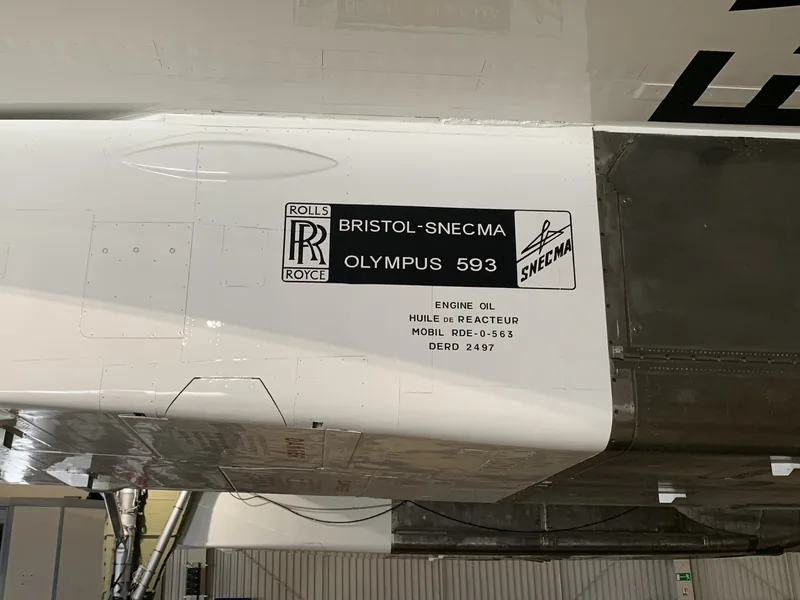
NASA’s student page has its own, shorter official wording, kept apart from the technical turbofan page. “A turbofan engine has a large fan at the front, which sucks in air. Most of the air flows around the outside of the engine, making it quieter and giving more thrust at low speeds. Most of today’s airliners are powered by turbofans.” [source]
The same student page also says, of jet engines in general, “By mixing this air with jet fuel, the temperature of the air can be as high as three thousand degrees.” The page does not say whether that is Fahrenheit or Celsius. This site does not guess. [source]
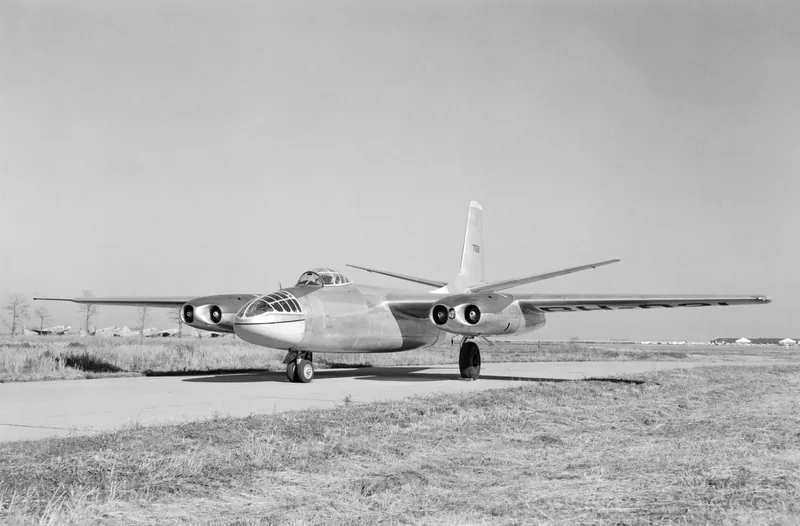
NASA’s gas-turbine page names four example aircraft and their engines, and the list is left as a list: “The DC-8 is powered by four high-bypass turbofan engines, the F-14 by two afterburning low-bypass turbofans, the C-130 by four turboprop engines, and the T-38 by two turbojet engines.” The B-45A in the photograph, a NACA Langley aircraft of 1949, is identified on its file as powered by four General Electric J35 turbojets — a different official identification, not added to NASA’s example list. [source]
Enjoyed this jet-engine desk?
No pop-ups. No intrusive advertising. Just interesting stuff. A little support helps the next mechanics.im site get built.